Evidence Action
Scaling proven, cost-effective solutions to reduce the burden of poverty for hundreds of millions of people across Africa and Asia. Every program is backed by rigorous evidence from randomized controlled trials.
Four programs reaching 530+ million people: Safe Water Now, Deworm the World, Equal Vitamin Access, and Syphilis-Free Start.
Learn More →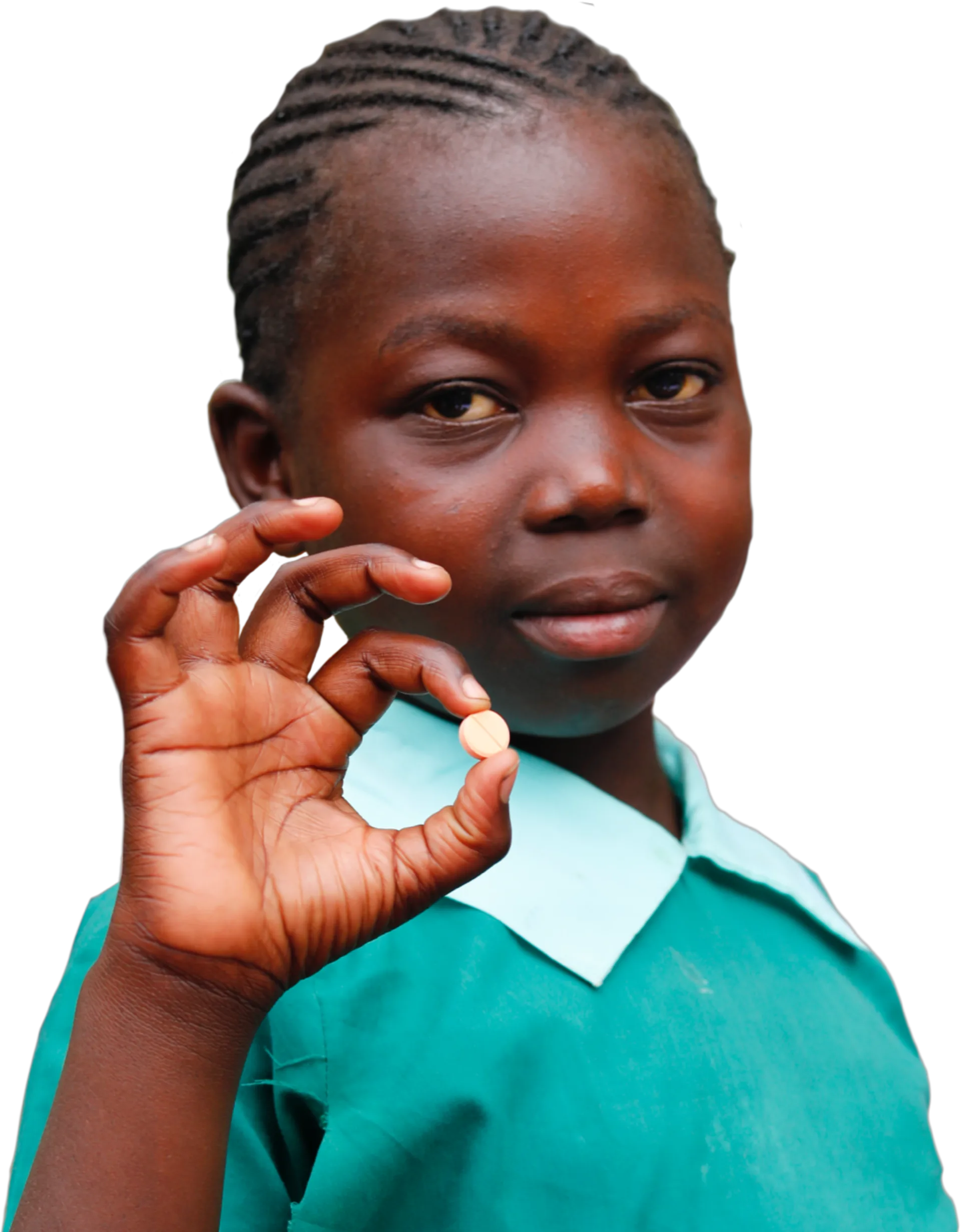
The Global Health Challenge
Billions of people face preventable health burdens that trap them in poverty:
There's a massive gap between what research shows is effective and what actually gets implemented. Proven solutions exist—simple pills, chlorine dispensers, basic vitamins—but reaching those who need them requires specialized expertise in scaling interventions across entire countries.
📊 The Evidence Gap
Randomized controlled trials have identified interventions that can save lives for just dollars. A deworming pill costs less than 50 cents. Water chlorination can save a child's life for $3,000—or add a year of healthy life for only $40. Yet these proven solutions aren't reaching the people who need them most.
Four Evidence-Based Programs
Evidence Action operates four distinct programs, each backed by rigorous research and scaled through government partnerships:
Safe Water Now
Providing sustained safe water access through chlorine dispensers and in-line chlorination. A network of 52,000+ dispensers across Kenya, Uganda, Malawi, and India—maintained by 100,000+ community volunteers.
10M people reachedDeworm the World
Mass school-based deworming in India, Pakistan, Nigeria, Kenya, and Malawi. Working with governments to deliver treatments that reduce worm prevalence by 48-97% and increase future earnings by 13%.
2B+ treatments deliveredEqual Vitamin Access
Combating iron deficiency anemia—the leading cause of childhood disability—through weekly iron and folic acid supplements delivered via schools in India and Malawi.
35M children reached in 2023Syphilis-Free Start
Enabling low-cost syphilis screening and treatment in prenatal care. Partnering with governments in Liberia, Cameroon, and Zambia to prevent stillbirths and congenital disabilities.
2,300+ adverse outcomes preventedThe Accelerator: Evidence Action's engine for new program development. A rigorous six-stage process identifies and pressure-tests evidence-backed interventions, building the next generation of programs.
How We Scale Impact
Evidence Action's technical assistance model works hand-in-hand with governments to leverage existing infrastructure and deliver treatments at scale.
Government Partnership
Work alongside ministries of health and education to build sustainable national programs
School-Based Delivery
Reach children where they already are—teachers trained to administer treatments safely
Data-Driven Decisions
Monitor, evaluate, and iterate programs based on rigorous evidence
Community Engagement
Local volunteers and promoters ensure adoption and sustainability
Cost-Effective
Less than $0.50 per deworming treatment; $1.50 per person per year for safe water
Iterate, Again
Continuously improve delivery models based on evidence and field learning
What makes it work:
- Leverage existing infrastructure: Instead of building from scratch, use schools, health facilities, and government systems
- No cost to families: Treatments delivered free through government systems reach those who need them most
- High adoption rates: Human-centered design yields chlorine adoption rates up to 5x higher than alternatives
- Government ownership: Build capacity for programs to continue independently—success means putting ourselves out of a job
Proven Impact
The Research Foundation:
- Nobel Prize-winning research: Programs founded on work by Michael Kremer (2019 Nobel Laureate) and Ted Miguel at UC Berkeley
- 25% reduction in school absenteeism for children who received deworming in Kenya's landmark RCT
- 13% increase in earnings and 14% increase in consumption when followed 20 years later
- 25% reduction in under-five mortality from water treatment interventions
- 49% reduction in anemia among children from iron and folic acid supplementation
🔬 Kenya National Deworming Program Results
An independent impact evaluation of Kenya's program, implemented with Evidence Action, found that the scheme reduced soil-transmitted helminth infection rates by 26.5 percentage points from 2012 to 2022. In Bihar, India, the program reached 80% of the target population—substantially exceeding WHO guidelines.
Recognition:
GiveWell Top Charity (2013-2022)
The Life You Can Save Best Charity
Best Innovative CSO in WASH (Malawi 2023)
GiveWell: $64.7M grant (2022)
About the Organization
📅 Founded
2013, spun off from Innovations for Poverty Action
📍 Headquarters
Washington, D.C. with offices across 7 countries
⚖️ Legal Status
501(c)(3) nonprofit (EIN: 90-0874591)
🌍 Countries
India, Pakistan, Kenya, Uganda, Malawi, Nigeria, Liberia, Cameroon, Zambia
Leadership:
- Kanika Bahl — CEO & President (since 2017; Board member since 2015)
- Former Executive Vice President at Clinton Health Access Initiative
- MBA from Stanford GSB; BA in Mathematical Economics from Rice University
- Also serves as Trustee of Anthropic's Long-Term Benefit Trust
Board includes:
- Kent Walker — President of Global Affairs, Google and Alphabet
- Stefano Bertozzi — Professor & Dean, School of Public Health, UC Berkeley
- Stephen Luby — Professor of Medicine, Stanford University
- Hari Menon — Country Director for India, Bill & Melinda Gates Foundation
Major Supporters:
- GiveWell — $42M+ in funding for Deworm the World; $64.7M for Safe Water (2022)
- Bill & Melinda Gates Foundation
- Weiss Asset Management Foundation
- USAID Development Innovation Ventures
- Dustin Moskovitz and Cari Tuna (Good Ventures)
Endorsed by: Peter Singer, Ezra Klein, Nicholas Kristof, Dylan Matthews, Bill Gates