The Walrus Talks at Home
Place and Belonging
Reimagining the spaces that bring us together
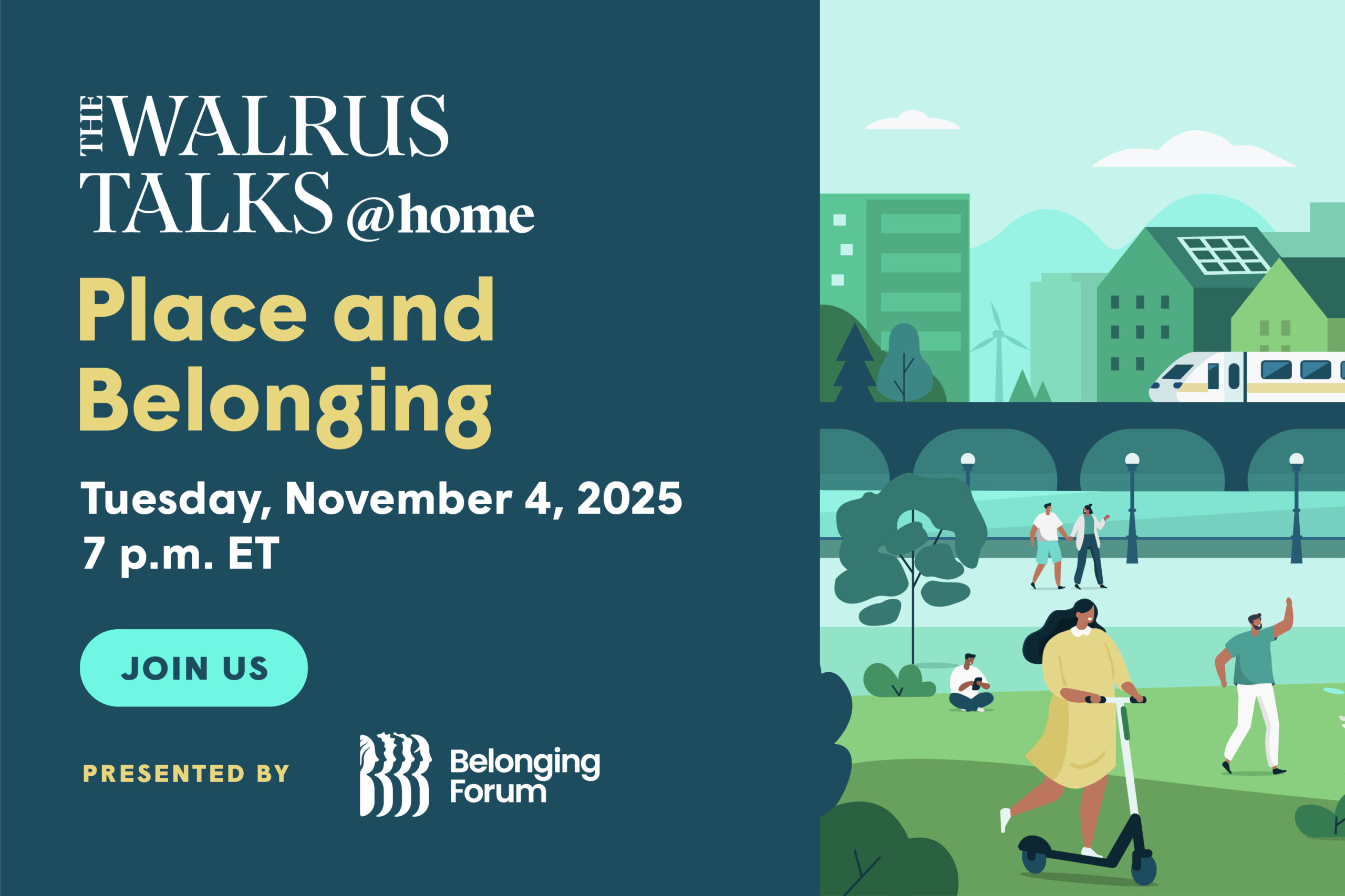
Event Details
Why Attend This Event
- For Community Organizers: Learn strategies for creating spaces that foster genuine connection
- For Urban Planners: Explore how design choices impact social cohesion and belonging
- For Librarians: Discover innovative approaches to third spaces in communities
- For Neighbors: Get inspired to strengthen connections in your own neighborhood
- For Anyone: Understand how physical and digital spaces shape our sense of home
At The Walrus Talks at Home: Place and Belonging, expert speakers share their unique perspectives on how the spaces we design and invest in can strengthen our social fabric. This virtual conversation explores the challenges and rewards of creating and sustaining "third spaces"—social environments outside of home and work where communities come together.
What Are Third Spaces?
Third spaces are the places between home and work where community happens. They are coffee shops where neighbors chat. Libraries where strangers become friends over shared books. Parks where kids play together while parents connect. Community centers where people gather for everything from exercise classes to town halls.
These spaces matter because they create opportunities for the kinds of casual, repeated encounters that build social trust and community bonds. In third spaces, we practice democracy. We learn to be neighbors. We discover that people who seem different from us share our concerns and dreams.
As more of life moves online and housing becomes less affordable, traditional third spaces are disappearing. Coffee shops require purchases. Community centers close. Parks lack programming. The result is increasing isolation and fragmented communities. This event explores how we can reverse that trend.
Featured Speakers
Jennifer Hollett — Host
Executive Director, The Walrus. Jennifer brings expertise in digital media and storytelling to conversations about how we connect in modern times.
Kim Samuel — Opening Remarks
Founder and Chief Architect, The Belonging Forum. Kim's work focuses on creating policies and practices that foster genuine belonging at local, national, and international levels.
Anna Gallagher-Ross
Senior Manager of Programming, The Bentway. Anna leads public space activation under Toronto's Gardiner Expressway, transforming overlooked infrastructure into vibrant community gathering places.
Jorge Garza
Director, Networks for Change, Tamarack Institute. Jorge works with communities across Canada to build collaborative networks that address poverty and strengthen social connections.
Michelle Hoar
Project Director, Hey Neighbour Collective; Fellow, Morris J. Wosk Centre for Dialogue, Simon Fraser University. Michelle's work focuses on building neighborhood connections and fostering dialogue across differences.
Åsa Kachan
CEO and Chief Librarian, Halifax Public Libraries. Åsa leads innovation in how libraries serve as essential community hubs and third spaces in the digital age.
Key Themes to Explore
Topics Covered
- Housing and its role in community connection
- Green spaces and environmental design for belonging
- Public libraries as essential third spaces
- Digital forums and online community building
- The responsibility to create inclusive gathering places
- Sustaining third spaces in challenging economic times
Why Place Matters for Belonging
The physical and digital spaces we inhabit shape who we become and how we relate to each other. When neighborhoods lack places to gather, isolation grows. When public spaces feel unwelcoming or unsafe, certain groups stay away. When third spaces require money to access, economic inequality deepens social division.
Housing as Foundation: Affordable, stable housing provides the foundation for all other forms of community participation. When people are constantly moving or struggling with housing insecurity, building neighborhood connections becomes nearly impossible.
Green Spaces as Equalizers: Parks, gardens, and natural areas offer free gathering places accessible to all. Well-designed green spaces create opportunities for chance encounters, shared experiences, and cross-generational connection.
Libraries as Democracy's Living Rooms: Public libraries remain one of the last truly public spaces—free, open to all, and designed for lingering. Modern libraries go beyond books to offer technology access, programming, meeting spaces, and community services.
Digital Spaces as Supplements: Online forums and social media can support community building, but they work best when they enhance rather than replace in-person connection. The question is how to design digital spaces that foster genuine belonging.
Creating Spaces That Welcome Everyone
Not all third spaces serve all people equally. Design choices about location, accessibility, programming, and rules determine who feels welcome and who stays away.
Truly inclusive spaces consider:
- Physical Accessibility: Can people with disabilities fully participate?
- Economic Accessibility: Are there free or low-cost options for engagement?
- Cultural Accessibility: Do programs and design reflect the community's diversity?
- Safety: Do all groups feel welcome and protected from harassment?
- Transportation: Can people easily reach these spaces via transit or foot?
- Programming: Are activities relevant to community needs and interests?
Creating spaces is just the beginning. Sustaining them requires ongoing investment, community input, and adaptation to changing needs. The most successful third spaces involve community members in decision-making from the start.
What You Will Take Away
Attendees will leave this event with:
- Understanding of how physical and digital spaces shape community belonging
- Examples of innovative third space projects from across Canada
- Strategies for creating or improving gathering places in your community
- Connections with others passionate about place-based community building
- Inspiration to take action in your own neighborhood
- Resources for further learning and engagement
Accessibility and Inclusion
The Walrus strives to be accessible and inclusive. Captioning will be available for this event. If you require additional support to fully participate, contact the organizers at [email protected] or (416) 971-5004, ext. 247.
About The Walrus
The Walrus is an independent, non-profit Canadian media organization. Through journalism, podcasts, events, and online discussion, The Walrus creates national conversations about matters that affect us all—from politics and the environment to business and national identity.
The Walrus Talks series brings together diverse voices to explore pressing issues facing communities today. Each event features short, engaging presentations followed by audience discussion.
This is a free virtual event, but registration is required. Sign up through Eventbrite to receive the link and access details. Space may be limited, so register early to secure your spot.
Register to Attend
Registration required for this free virtual event. Sign up through Eventbrite to receive access details.
REGISTER ON EVENTBRITE